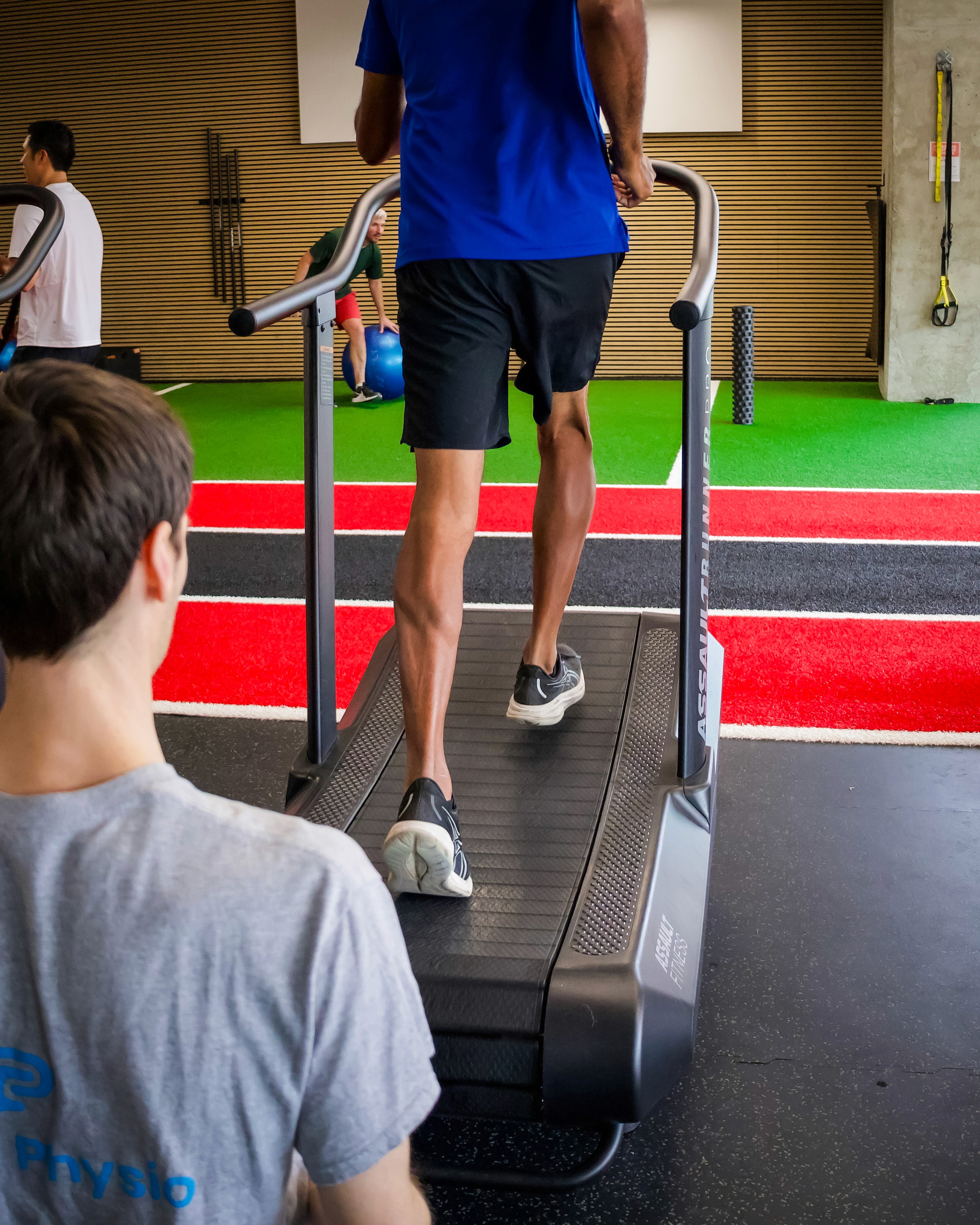
Forza offers one-on-one sports physiotherapy in downtown Vancouver. Your rehab is tested, loaded and progressed on a full gym floor, so you get back to your sport with numbers behind you.
One-to-one with a registered physiotherapist every session
Strength measured with force plates and dynamometers
Rehab on a full training floor inside Evolve Strength
Back to Training Too Soon?
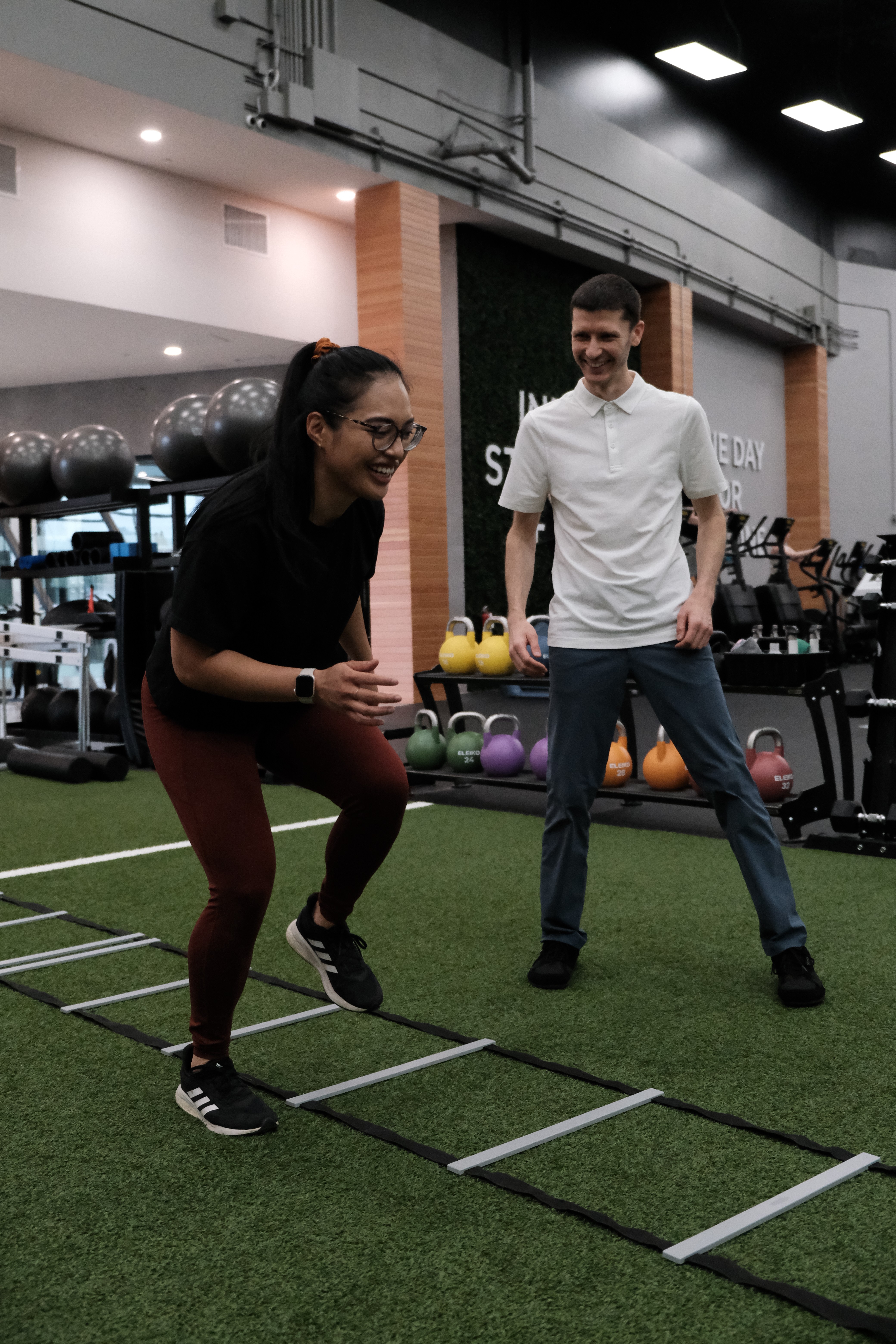
Most sports injuries come back because the rehab stopped when the pain did.
Generic exercise sheets that ignore your sport
No testing to show one side has caught up
Forza sports physiotherapy measures where you are and builds from there.
Meet Your Physiotherapists
Forza is home to 4 registered physiotherapists who treat one-on-one.

Jordan Huhta
MScPT, Physiotherapist
He/Him/His
Jordan leads physiotherapy on the major trauma and orthopaedics unit at Vancouver General Hospital. He trained at Manchester Metropolitan University and studied Kinesiology at UBC.
Treats: orthopaedic and post-surgical injuries, lower-limb injuries, and ACL rehab.

Teala McEwan
MSc, Physiotherapy Physiotherapist
She/Her/Hers
Teala earned her Master's in Physiotherapy at Keele University and spent 3 years in private musculoskeletal practice in the UK.
Treats: musculoskeletal injuries and pelvic health, with added training in pelvic health physiotherapy, acupuncture, vestibular rehabilitation, and concussion management.

Justin Mazzei
MScPT, Physiotherapist and Co-Founder
He/Him/His
Justin completed a Master's in Physiotherapy at the University of Queensland and trained across Australia. He studied Kinesiology and Exercise Science at the University of the Fraser Valley.
Treats: return-to-sport, injury prevention, and overhead and running athletes, and offers dry needling.
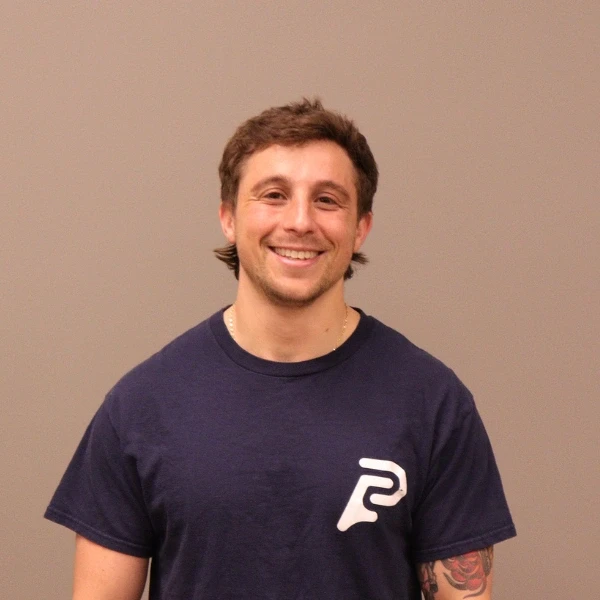
Marcel Wallace
MScPT, Physiotherapist and Co-Founder
He/Him/His
Marcel earned his Master's in Physiotherapy from Brunel University in the UK and moved to Canada in 2020. He is an Olympic weightlifter and lectures in orthopaedic pathology.
Treats: low back, shoulder, hip, knee, and ankle injuries, and strength athletes.
How force plate testing works. You stand, squat, jump or push on force plates while they record how much force each leg produces and how quickly. Dynamometers measure the strength of single muscle groups. The software compares your two sides and tracks the same numbers over time, so your physiotherapist can show you how your injured side compares with the other instead of estimating it.
Retesting shows whether you are ready for the next stage, so progression follows your results rather than the calendar. Sessions run on the Evolve Strength gym floor, so the last stages of rehab look like training: running, jumping, landing and lifting.
Related programs at Forza: ACL rehab in Vancouver and Achilles tendinitis treatment. Runners can also read our guide to running injury physiotherapy in Vancouver.
