Blog

ACL Rehab Timeline: What Each Stage Looks Like After Surgery
An ACL rehab timeline explained stage by stage, from the first weeks after surgery to return to sport, and why tests matter more than dates.

Justin Mazzei
Justin Mazzei
The most common question after ACL surgery is how long rehab takes. The honest answer is that an ACL rehab timeline is set by what your knee can do, not by the calendar. This guide walks through each stage, what usually happens in it, and the tests that tell you and your physiotherapist when you are ready to move on.
Why an ACL rehab timeline is built on tests, not dates
Every knee recovers at its own pace. Graft type, the state of your knee before surgery, other damage such as a meniscus repair, your training history and your surgeon's protocol all change the picture. HealthLink BC notes that rehab after an ACL injury usually runs from several months to a year.
That is why good ACL rehab moves you through stages when you pass the criteria for the next one. A date on a calendar tells you how long it has been. A strength test tells you whether your knee is ready.
Here is the caveat most clinics will not put in writing: feeling fine is not a test. Many people feel normal walking around long before their thigh muscles on the operated side have caught up. If rehab stops when daily life feels easy, the gap is still there when you return to sport.
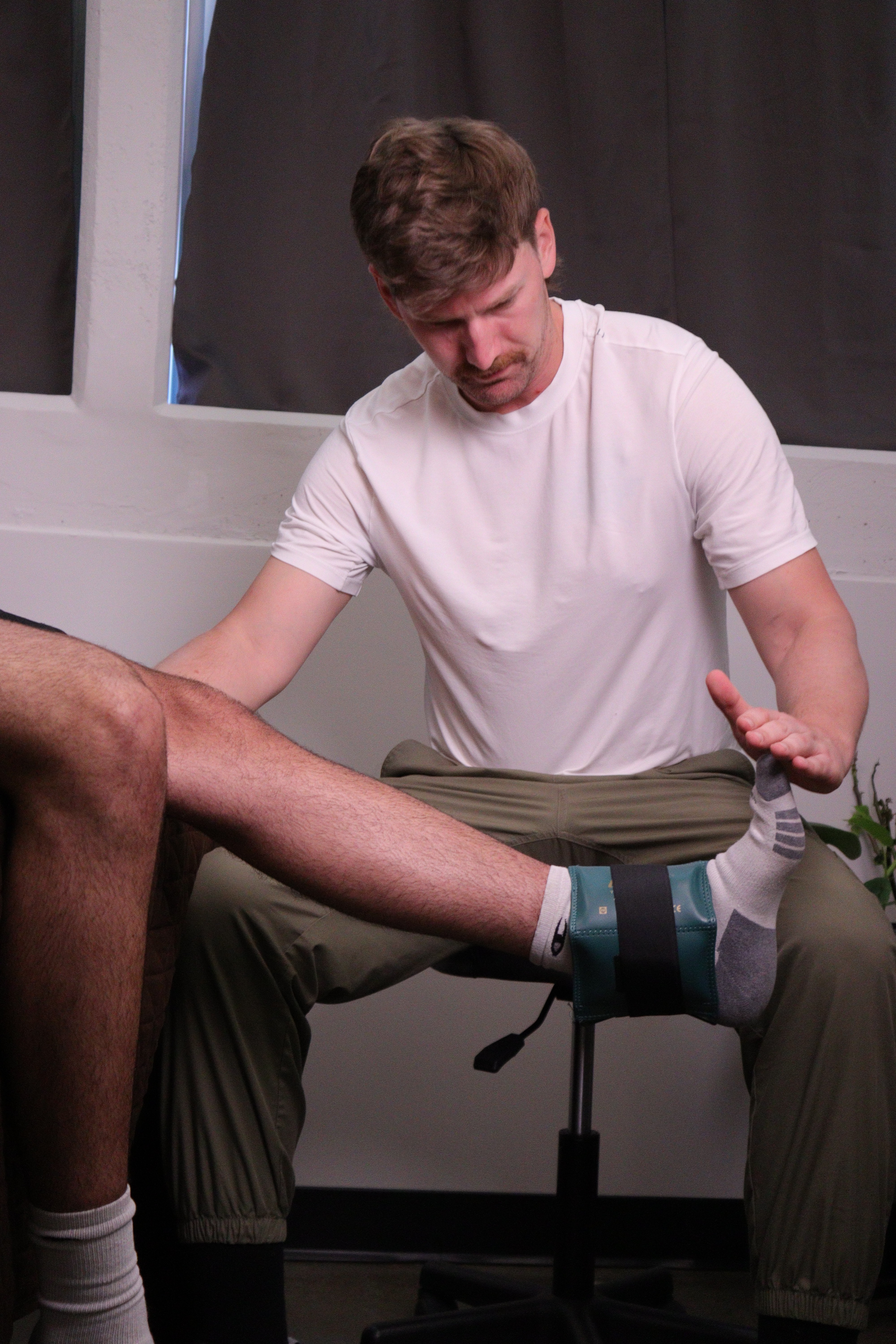
Before surgery: prehab
If you have time between injury and surgery, use it. Prehab usually focuses on:
Settling swelling and getting the knee fully straight
Waking up the quadriceps so you can lift your leg with the knee locked
Getting your bend back as far as is comfortable
Keeping the rest of your body strong
People who go into surgery with a straight, quiet knee and good quad control tend to find the first weeks afterwards easier. Your physiotherapist works alongside your surgeon's advice here; some surgeons have a strong view on prehab and timing.
The first weeks after surgery
The early stage is about protecting the graft and getting the basics back. Your goals are usually a fully straight knee, a steadily improving bend, swelling under control, and a quad muscle that switches on properly.
Expect frequent, simple exercises at home, plus regular sessions with your physiotherapist to check range of motion and progress your program. Crutches and any brace follow your surgeon's instructions, not a generic schedule.
What not to do: push through sharp pain to chase a range-of-motion number, or skip the boring exercises because they feel too easy. The basics in this stage set the ceiling for everything that follows.
Building strength and walking normally
Once the knee is calm and moving well, the focus shifts to strength. This is where most of the work happens, and where a gym matters. Sessions build up leg press, squats, split squats, step-ups, hamstring work and calf strength, with load increasing as your knee tolerates it.
Walking without a limp, climbing stairs normally and balancing on one leg are common markers in this stage. At Forza, rehab happens on a full gym floor inside Evolve Strength, so your program can progress to real loads instead of stopping at resistance bands. Read more on our ACL rehab program in downtown Vancouver.
Running, jumping and return to sport
Returning to running and jumping is a milestone, and it should be earned with numbers. Before running, your physiotherapist will usually want to see good strength in the operated leg compared with the other side, a calm knee after loading, and control on single-leg tasks.
Then come hops, landings, change of direction and sport-specific drills. Landing mechanics matter as much as strength here. A knee that collapses inward on landing needs more work before cutting and pivoting are added.
Return to sport: the stage people rush
This is the stage with the most pressure to skip ahead, especially when the season is starting. The evidence is a good reason to wait. In the Delaware-Oslo ACL cohort study, published in the British Journal of Sports Medicine, people who returned to pivoting sport earlier, or before passing return-to-sport criteria, had a higher rate of knee reinjury.
Return-to-sport testing usually includes:
Strength testing of the quadriceps and hamstrings on both legs
A series of hop tests comparing one leg with the other
Movement quality on landing and change of direction
How confident you feel about your knee, measured with a questionnaire
Your surgeon and physiotherapist make this call together, with your results in front of them.
How Forza measures each stage
Forza tests ACL patients with force plates, dynamometers and VALD equipment, which compare your injured leg with the uninjured one at every stage. The results set your baseline and show progress in numbers, so the decision to move to the next stage is based on what your knee can do.
Every session is one-on-one with a registered physiotherapist for the full appointment. Your first visit is a 45-minute ($145) or 60-minute ($190) initial assessment, where your physiotherapist reviews your surgery and goals, screens your movement and runs strength testing on both legs. If you have had other surgery or are earlier in your recovery, our post-op rehab program covers the same approach.
What to bring to your first appointment
A little preparation makes the first visit more useful:
Your surgeon's operation notes and any rehab protocol they gave you
Scan reports, if you have them
Your extended health benefits information (Forza direct bills most major plans in BC)
Shorts or clothes you can move and lift in
ACL rehab timeline FAQ
How long does ACL rehab take?
ACL rehab takes as long as your knee needs to pass each stage's tests, which is different for everyone. HealthLink BC describes rehab after an ACL injury as usually running from several months to a year. Your physiotherapist will give you an estimate after assessing you, and update it as your test results come in.
When can I start physio after ACL surgery?
Most people start physio within the first days or weeks after ACL surgery, following their surgeon's instructions. Early sessions focus on getting the knee straight, reducing swelling and switching the quadriceps back on. Many people also start rehab before surgery, which can make the first weeks afterwards easier.
Do I need a referral for ACL rehab in Vancouver?
No, you can book physiotherapy at Forza without a doctor's referral. Some extended health plans ask for one before they reimburse, so check your policy. Bring your surgeon's protocol to your first appointment so your physiotherapist can work alongside it.
Can I do ACL rehab without surgery?
Yes, rehab is part of managing an ACL injury with or without surgery. Some people manage well without reconstruction, depending on their knee and the activities they want to return to. Your physiotherapist assesses your knee and helps you plan around your goals, alongside your doctor's advice.
How do I know I am ready to return to sport?
You are ready to return to sport when you pass return-to-sport testing, not when a set number of weeks has gone by. Testing usually compares strength and hop performance between your legs, checks landing and change of direction, and asks how confident you feel. Your surgeon and physiotherapist decide together.
Next step
If you are preparing for ACL surgery or already recovering from it, book an initial assessment so your rehab starts with a baseline. You can book online with Forza Physiotherapy in downtown Vancouver, or start with a free 10-minute discovery call if you would like to talk it through first. Athletes heading back to competition can also read about our sports physiotherapy.
Ready to get back to what you love?
Book a one-on-one assessment with a registered physiotherapist inside Evolve Strength, 658 Homer St, downtown Vancouver. No doctor’s referral needed, and we direct bill the major extended health plans.
Related Articles
Do You Need a Doctor's Referral for Physiotherapy in Vancouver?
Marcel Wallace
Health
What Is Active Rehabilitation, and Who Pays for It in Vancouver?
Justin Mazzei
Health
Physiotherapy for CrossFit, Hyrox and Lifting Athletes in Vancouver
Marcel Wallace
Health
Exercise Therapy in Vancouver: What It Is and Who It Helps
Marcel Wallace
Health